The 14th International Congress of Logic, Methodology and Philosophy of Science, held last July, included a special symposium on the subject of "What is an algorithm?" This may seem to be a strange question to ask just before the Turing Centenary Year. Didn't Turing answer this question decisively?
March 2012 - Vol. 55 No. 3

Features

Opinion Letters to the editor
From Syntax to Semantics For AI
Concerning Moshe Y. Vardi's Editor's Letter "Artificial Intelligence: Past and Future" (Jan. 2012), I'd like to add that AI won't replace human reasoning in the near future for reasons apparent from examining the context, or "meta," of AI.

Bertrand Meyer presents data on the computer and programming knowledge of two groups of novice CS students.

Online games are harnessing humans' skills to solve scientific problems that are currently beyond the ability of computers.
Researchers are finding ways to develop ultra-efficient and nonvolatile computer processors out of nanoscale magnets. A number of obstacles, however, stand in the way of their commercialization.

Computer programs and new mathematical algorithms are helping law enforcement agencies better predict when and where crimes will occur.

Stanford University's experiment with online classes could help transform computer science education.

Scientists worldwide are honored for their contributions to design, computing, science, and technology.

Opinion Computing ethics
War 2.0: Cyberweapons and Ethics
Considering the basic ethical questions that must be resolved in the new realm of cyberwarfare.

Opinion Legally speaking
Do Software Copyrights Protect What Programs Do?
A case before the European Court of Justice has significant implications for innovation and competition in the software industry.

Opinion The profession of IT
What if practices rather than ideas are the main source of innovation?

Opinion Viewpoint
Training Users vs. Training Soldiers: Experiences from the Battlefield
How military training methods can be applied to more effectively teach computer users.

Opinion Viewpoint
The Artificiality of Natural User Interfaces
Toward user-defined gestural interfaces.

Revisiting Network I/O APIs: The Netmap Framework
It is possible to achieve huge performance improvements in the way packet processing is done on modern operating systems.

Make a guess, double the number, and then move to the next larger unit of time.
Research and Advances Contributed articles
Mobicon: A Mobile Context-Monitoring Platform
User context is defined by data generated through everyday physical activity in sensor-rich, resource-limited mobile environments.

Research and Advances Contributed articles
A Comparative Study of Cyberattacks
Attackers base themselves in countries of convenience, virtually.

Research and Advances Review articles
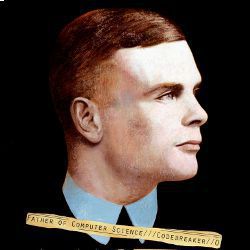
Embodied and disembodied computing at the Turing Centenary.
Research and Advances Review articles
The Next Generation of GPS Navigation Systems
A live-view GPS navigation system ensures that a user's cognitive map is consistent with the navigation map.

Research and Advances Research highlights
Technical Perspective: The Benefits of Capability-Based Protection
Affordable personal computing hardware and the usable GUI-based PC operating systems made the vision of "a computer on every desktop and in every home" a reality. Thanks to the Internet, personal computers did not remain personal for very long.
Research and Advances Research highlights
A Taste of Capsicum: Practical Capabilities For Unix
Capsicum is a lightweight operating system capability and sandbox framework planned for inclusion in FreeBSD 9. Capsicum extends, rather than replaces, UNIX APIs, providing new kernel primitives and a userspace sandbox API. These tools support decomposition of monolithic UNIX applications into compartmentalized logical applications.

Research and Advances Research highlights
Technical Perspective: A New Way to Search Game Trees
Researchers in artificial intelligence know that computers still lag far behind human levels of play in many games of strategy. One such contest of wits is Go, which remains a stronghold of human superiority. That may be about to change.
Research and Advances Research highlights
The Grand Challenge of Computer Go: Monte Carlo Tree Search and Extensions
The ancient oriental game of Go has long been considered a grand challenge for artificial intelligence. However, computer Go programs based on Monte-Carlo tree search now play at human-master levels and are beginning to challenge top professional players.

Opinion Last byte
Puzzled: Solutions and Sources
Last month (Feb. 2012) we posted a trio of brainteasers concerning where sets meet, or Venn diagrams. Here, we offer solutions to two of them. How did you do?

Opinion Last byte
ACM CEO John White talks about initiatives to serve the organization's professional members, increase international activities, and reform computer science education.