CACM logo

January 2012 (Vol. 55, No. 1)

Table of Contents

Artificial Intelligence: Past and Future

The most dramatic chess match of the 20th century was the May 1997 rematch between the IBM supercomputer Deep Blue and world champion Garry Kasparov, which Deep Blue won. While this victory was considered by many a triumph for …

Page 5

DEPARTMENT: Letters to the editor

Software Engineering Is Engineering

I was confounded by the conclusion of Michael Davis's Viewpoint "Will Software Engineering Ever Be Engineering?" (Nov. 2011), mainly because anything I can do in code I can also do in digital hardware, analog hardware, fluidics …

Pages 6-7

ACM President's Letter

Early in 2011, IEEE Computer Society President Sorel Reisman and I began discussing how IEEE-CS and ACM could work together more cooperatively. We …

Page 8

ACM's Annual Report

FY11 was a defining year for ACM as the largest educational and scientific computing society in the world. Many of the initiatives we have set forth over the last few years have taken root and we now see tangible evidence …

Pages 9-13

DEPARTMENT: BLOG@CACM

Understanding CS1 Students; Defective Software

Mark Guzdial writes about why teachers must grasp introductory CS students' theories about computing. Bertrand Meyer argues for the necessity of analyzing large-scale software disasters and publishing a detailed technical study …

Pages 14-15

DEPARTMENT: CACM online

eBooks Will Abound in the ACM Digital Library

ACM is preparing to offer a new and exciting member benefit for 2012; eBooks accessible via the ACM Digital Library! Expanding the eBooks Collections in the ACM Learning Center …

Page 16

COLUMN: News

Better Medicine Through Machine Learning

Computers that tease out patterns from clinical data could improve patient diagnosis and care.

Pages 17-19

Revamping Storage Performance

Great strides are being made in finding fast alternatives to the slow disks that dominate storage systems, but fast media are not nearly enough.

Pages 20-22

Law and Disorder

International law has always been a murky and Byzantine area. However, the Internet and digital technology have raised the stakes, the risks, and the challenges.

Pages 23-25

Celebration Time

The centennial celebrations of Alan Turing's birth might help turn a quiet British genius into an iconic global hero.

Page 26

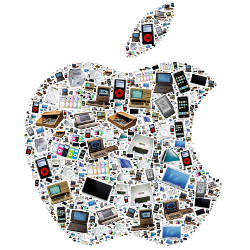
Analyzing Apple Products

Researchers untangle the complex web of Apple's global supply chain — and offer lessons for managers and policymakers trying to chart the future course of U.S. industry.

Page 27

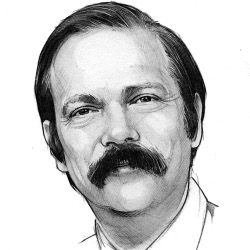
John McCarthy, 1927 – 2011

Winner of the 1971 A.M. Turing Award, John McCarthy was a founder of artificial intelligence and inventor of the Lisp programming language.

Pages 28-29

COLUMN: Law and technology

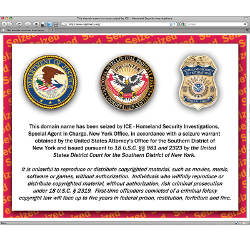
The Yin and Yang of Copyright and Technology

Examining the recurring conflicts between copyright and technology from piano rolls to domain-name filtering.

Pages 30-32

COLUMN: The business of software

The Difference Engine

Observations on cognitive diversity and team performance.

Pages 33-34

COLUMN: Historical reflections

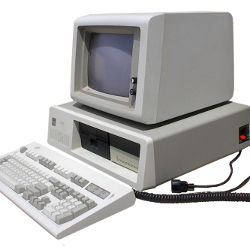
The IBM PC: From Beige Box to Industry Standard

Looking back at three decades of PC platform evolution.

Pages 35-37

COLUMN: Viewpoint

Interfaces for the Ordinary User: Can We Hide Too Much?

Increasing the visibility and access to underlying file structure on consumer devices can vastly improve the user experience.

Pages 38-40

COLUMN: Interview

An Interview with Stephen A. Cook

Stephen A. Cook, winner of the 1982 A.M. Turing Award, reflects on his career.

Pages 41-46

SECTION: Practice

Creating Languages in Racket

Sometimes you just have to make a better mousetrap.

Pages 48-56

Bufferbloat: Dark Buffers in the Internet

Networks without effective AQM may again be vulnerable to congestion collapse.

Pages 57-65

I/O Virtualization

Decoupling a logical device from its physical implementation offers many compelling advantages.

Pages 66-73

SECTION: Contributed articles

The State of Phishing Attacks

Looking past the systems people use, they target the people using the systems.

Pages 74-81

Flexible Experimentation in Wireless Sensor Networks

Virtual testbeds model them by seamlessly integrating physical, simulated, and emulated sensor nodes and radios in real time.

Pages 82-90

Long-Term Confidentiality of PKI

How to guarantee files encrypted and transmitted today stay confidential for years to come.

Pages 91-95

SECTION: Review articles

(Computer) Vision Without Sight

Computer vision holds the key for the blind or visually impaired to explore the visual world.

Pages 96-104

SECTION: Research highlights

Technical Perspective: Where Do People Draw Lines?

Computer graphics once focused exclusively on realism. The field eventually broadened to include other pictorial styles. The breadth of situations in which line drawings are …

Page 106

Where Do People Draw Lines?

This paper presents the results of a study in which artists made line drawings intended to convey specific 3D shapes.

Pages 107-115

Technical Perspective: Content-Centric Networking

Much has changed in the 50 years since the invention of packet switching and the early network designs and deployments that would evolve into today's Internet. The designs …

Page 116

Networking Named Content

Current network use is dominated by content distribution and retrieval yet current networking protocols are designed for conversations between hosts. We present Content-Centric Networking which uses content chunks as a primitive …

Pages 117-124

COLUMN: Last byte

Future Tense: The Near Cloud

Wish I never pulled the plug…

Pages 136-ff

About Communications | Join ACM External Link | Renew External Link | Subscribe External Link | Sign In | For Authors | For Advertisers External Link | Privacy | Site Map | Help | Contact Us | Mobile Site

Copyright © 2012 by the ACM. All rights reserved.