India has 1.2 billion individuals, of which about 400 million are in the 1–15 age group and another about 400 million in the 15–35 age group. India, therefore, has the opportunity and responsibility to provide the future intellectual work force in computing and other areas.
June 2011 - Vol. 54 No. 6

Features

Opinion Letters to the editor
Why Concurrent Objects Are Recurrently Complicated
Nir Shavit's article "Data Structures in the Multicore Age" (Mar. 2011) was a thrill to read. I was especially intrigued by his exposition on concurrent objects. Also important is to point out that Shavit's pseudocode for the lock-free stack included an unstated restriction.

To ensure the timely publication of articles, Communications created the Virtual Extension (VE) to expand the page limitations of the print edition by bringing readers the same high-quality articles in an online-only format. VE articles undergo the same rigorous review process as those in the print edition and are accepted for publication on merit. The following synopses are from articles now available in their entirety to ACM members via the Digital Library.
Simple Design; Research vs. Teaching; and Quest to Learn
Daniel Reed writes about design and disruptive technologies. Mark Guzdial discusses the tension between teaching and research at U.S. universities. Judy Robertson argues in favor of educational video games in the classroom.

Opinion CACM online
If you're one of the more than 1,000,000 scientists, practitioners, educators, or students who regularly read Communications of the ACM in print or online, you may have noticed that a new feature has recently been introduced on the magazine's Web site—video.

Researchers have developed a new networking algorithm, modeled after the neurological development of the fruit fly, to help distributed networks self-organize more efficiently.

Leslie Valiant talks about machine learning; parallel computing, and his quest for simplicity.

The Promise of Flexible Displays
New screen materials could lead to portable devices that are anything but rectangular, flat, and unbendable.

M. Frans Kaashoek discusses systems work, "undo computing," and what he learned from Andrew S. Tanenbaum.

All the News That’s Fit For You
Personalized news promises to make daily journalism profitable again, but technical and cultural obstacles have slowed the industry's adoption of automated personalization.

Opinion Privacy and security
Identity Management and Privacy: A Rare Opportunity To Get It Right
The National Strategy for Trusted Identities in Cyberspace represents a shift in the way the U.S. government is approaching identity management, privacy, and the Internet.

Opinion The profession of IT
Considerable progress has been made toward the formation of a computing profession since we started tracking it in this column a decade ago.

Opinion The business of software
Practical Application of Theoretical Estimation
One of the most popular and successful approaches to estimating software projects is the Putnam model. Developed in the 1970s by Larry Putnam, Sr., this model shares with other models a reciprocal exponent relationship of effort/cost to development time.

Opinion Inside risks
The Risks of Stopping Too Soon
Good software design is never easy, but stopping too soon makes the job more difficult.
Opinion Kode Vicious
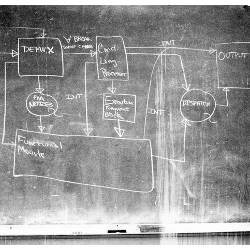
Kode Vicious's thoughts on forking, config files, and using internal wikis.

Opinion Viewpoint
Computer Science Can Use More Science
Software developers should use empirical methods to analyze their designs to predict how working systems will behave.

If You Have Too Much Data, Then ‘Good Enough’ Is Good Enough
In today's humongous database systems, clarity may be relaxed, but business needs can still be met.


Does Deterrence Work in Reducing Information Security Policy Abuse By Employees?
Methods for evaluating and effectively managing the security behavior of employees.

Research and Advances Contributed articles
Advancing the State of Home Networking
Before building the network or its components, first understand the home and the behavior of its human inhabitants.

Research and Advances Contributed articles
10 Rules For Scalable Performance in Simple Operation’ Datastores
Partition data and operations, keep administration simple, do not assume one size fits all.

Research and Advances Contributed articles
Specification and Verification: The Spec# Experience
Can a programming language really help programmers write better programs?

Research and Advances Review articles
PageRank: Standing on the Shoulders of Giants
The roots of Google's PageRank can be traced back to several early, and equally remarkable, ranking techniques.

Research and Advances Research highlights
Technical Perspective: The Quest For a Logic For Polynomial-Time Computation
The interaction between computation and logic goes back to the beginnings of computer science with the development of computability theory in the 1930s. In recent decades, the interaction between computation and logic has spanned the spectrum of computer science.
Research and Advances Research highlights
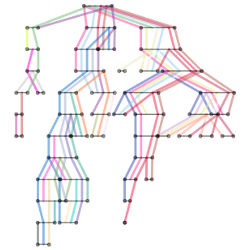
From Polynomial Time Queries to Graph Structure Theory
We give a logical characterization of the polynomial-time properties of graphs with excluded minors.
Research and Advances Research highlights
Technical Perspective: Data Analysis at Astonishing Speed
The importance of data analysis has never been clearer. Globe-spanning scientific collaborations are exploring data-intensive questions at a scale limited only by the power of the computing resources they can harness.
Research and Advances Research highlights
Dremel: Interactive Analysis of Web-Scale Datasets
Dremel is a scalable, interactive ad hoc query system for analysis of read-only nested data. By combining multilevel execution trees and columnar data layout, it is capable of running aggregation queries over trillion-row tables in seconds.

Opinion Last byte
Puzzled: Solutions and Sources
Last month (May 2011, p. 120) we posted a trio of brainteasers, including one as yet unsolved, concerning games and their roles and turns, with randomness either removed or inserted. Here, we offer solutions to two of them. How did you do?

Opinion Last byte
Leslie Valiant discusses machine learning, parallel computing, and computational neuroscience.

Research and Advances Contributed articles: Virtual extension
Viscous Democracy For Social Networks
Decision-making procedures in online social networks should reflect participants' political influence within the network.

Research and Advances Contributed articles: Virtual extension
Wireless on the Precipice: The 14<sup>th</sup> Century Revisited
Business continuity plans for the wireless world must address solar activity.