Science has been growing new legs of late. The traditional "legs" (or "pillars") of the scientific method were theory and experimentation. Computational science has been called the 'third pillar' of scientific inquiry, and has been recently augmented by yet a "fourth paradigm."
September 2010 - Vol. 53 No. 9

Features

Opinion Letters to the editor
More Than One Way to Annotate Metadata
"Managing Scientific Data" (June 2010) explained that data generated by research projects is valuable only when annotated with metadata describing the data's provenance, context, and meaning. However, a given data item can be annotated in more ways than one.

Expanding CS Education; Improving Software Development
Ed H. Chi writes about the social Web's impact on CS education. Ruben Ortega discusses software and test-driven development.

Opinion CACM online
Numbers give meaning to the promises on the Communications Web site to deliver timely, substantive content that complements the magazine's peer-reviewed material and makes Communications a valued component of ACM membership.

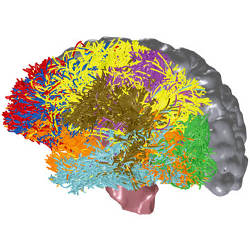
Computational neuroscientists are learning that the brain is like a computer, except when it isn't.
Sensor-equipped bicycles are providing valuable data to cyclists, city planners, and computer scientists.

Degrees, Distance, and Dollars
The Internet is making higher education accessible to a whole new class of students—but not necessarily at a lower cost.

ACM's expansion into China will support local professionals and increase Chinese involvement in ACM's international activities.

Kyoto Prize and Other CS Awards
László Lovász, Vinton G. Cerf, and other researchers are honored for their contributions to computer science.


Opinion Law and Technology
Principles of the Law of Software Contracts
An overview of a new set of legal principles for software contracts developed by the American Law Institute.

Opinion The profession of IT
Cyber attack—the other side of cyber defense—deserves a more open discussion than it has been getting.


Opinion Point/Counterpoint
Future Internet Architecture: Clean-Slate Versus Evolutionary Research
Should researchers focus on designing new network architectures or improving the current Internet?
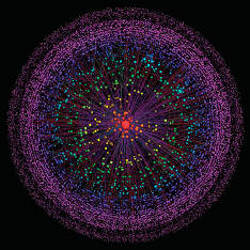
Computers in Patient Care: The Promise and the Challenge
Information technology has the potential to radically transform health care. Why has progress been so slow?

Injecting Errors For Fun and Profit
Error-detection and correction features are only as good as our ability to test them.
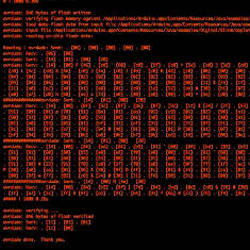
Thinking Clearly About Performance, Part 1
Improving the performance of complex software is difficult, but understanding some fundamental principles can make it easier.

Research and Advances Contributed articles
Confronting the Myth of Rapid Obsolescence in Computing Research
Computing research ages more slowly than research in other scientific disciplines, supporting the call for parity in funding.

Research and Advances Contributed articles
The same component isolation that made it effective for large distributed telecom systems makes it effective for multicore CPUs and networked applications.

Research and Advances Review articles
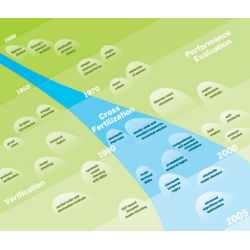
Performance Evaluation and Model Checking Join Forces
A call for the perfect marriage between classical performance evaluation and state-of-the-art verification techniques.
Research and Advances Research highlights
Technical Perspective: Programming With Differential Privacy
Government agencies worldwide release statistical information about population, education, and health, crime, and economic activities. In the U.S., protecting this data goes back to the 19th century, when the field of statistical disclosure limitation was born.
Research and Advances Research highlights
Privacy Integrated Queries: An Extensible Platform For Privacy-Preserving Data Analysis
Privacy Integrated Queries (PINQ) is an extensible data analysis platform designed to provide unconditional privacy guarantees for the records of the underlying data sets. PINQ's analysis language and its implementation provide formal guarantees of differential privacy for any and all uses of the platform.

Research and Advances Research highlights
Technical Perspective: Constraint Satisfaction Problems and Computational Complexity
It takes little imagination to come up with a wealth of problems in scheduling and planning that can be expressed as Constraint Satisfaction Problems (CSPs). It's no surprise, then, that CSPs have an important place in the fields of AI and operations research.
Research and Advances Research highlights
Constraint Satisfaction Problems and Global Cardinality Constraints
In a constraint satisfaction problem (CSP) the goal is to find an assignment of a given set of variables subject to specified constraints. A global cardinality constraint is an additional requirement that prescribes how many variables must be assigned a certain value.

Opinion Last byte
Puzzled: Solutions and Sources
It's amazing how little we know about good old plane geometry. Last month (August 2010, p. 128) we posted a trio of brainteasers, including one as yet unsolved, concerning figures on a plane. Here, we offer solutions to two of them.

Opinion Last byte
Future Tense: Little Brother Is Watching
In a world of technology and fear, the public gets to know what it wants to know . . . and more than it can possibly digest.