CACM logo

April 2009 (Vol. 52, No. 4)
A Direct Path to Dependable Software

Table of Contents

DEPARTMENT: Education letter

Computing Education Matters

The student enrollment crisis in computer science has propelled the need to re-examine all aspects of computing education on a global scale.

Page 5

DEPARTMENT: Letters to the editor

What Role for Computer Science in the War on Terror?

The contributed article "The Topology of Dark Networks" by Jennifer Xu and Hsinchun Chen (Oct. 2008) ignored sensitive cultural issues while addressing a subject that might by itself offend some people in Muslim societies, including …

Page 9

DEPARTMENT: CACM online

An Ongoing Study in Usability

The new Communications Web site went live last month after several weeks of intense beta testing. While we gleaned many valuable insights and lessons in this process, several highlights and user comments do stand out.

Page 10

COLUMN: News

Learning More About Active Learning

Active learning algorithms are producing substantial savings in label complexity over passive learning approaches.

Pages 11-13

Our Sentiments, Exactly

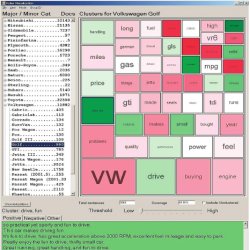
With sentiment analysis algorithms, companies can identify and assess the wide variety of opinions found online and create computational models of human opinion.

Pages 14-15

Virtual Colonoscopies

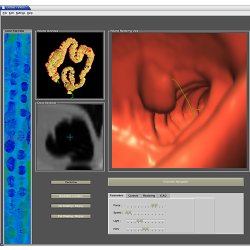
Doctors are saving lives with virtual, 3D exams that are less invasive than a conventional optical colonoscopy.

Pages 16-18

Time to Reboot

A diverse, international group of more than 200 attendees met at the Rebooting Computing Summit to address the problems confronting computer science.

Page 19

IT Ecosystem in Peril

Experts warn the U.S. may soon relinquish its leadership role in IT research and development.

Page 20

COLUMN: Viewpoints

IT and the World's 'Bottom Billion'

How can information technology be best applied to address problems and provide opportunities for inhabitants of the world's poorest countries?

Pages 22-24

Kode Vicious: System Changes and Side Effects

Every system change has to have some benefit to users, but every time you add a new responsibility a system is tweaked in some way, which usually has unintended side effects.

Pages 25-26

Strategies for Difficult (and Darwinian) Economic Times

How the axiom of survival of the fittest applies in the context of a global economic downturn.

Pages 27-28

Computing as Social Science

College students must be shown that computer science is social, relevant, important, and caring. The way computer science is taught can hold students' interest by encouraging them to develop solutions to socially relevant problems …

Pages 29-30

Research Evaluation for Computer Science

Reassessing the assessment criteria and techniques traditionally used in evaluating computer science research effectiveness.

Pages 31-34

SECTION: Practice

Purpose-Built Languages

The ecosystem of purpose-built languages is a key part of systems development.

Pages 36-41

Cybercrime 2.0: When the Cloud Turns Dark

Web-based malware attacks are more insidious than ever. What can be done to stem the tide?

Pages 42-47

ORM in Dynamic Languages

Dynamic languages offer a taste of object-relational mapping that eases application code.

Pages 48-55

SECTION: Contributed articles

Database and Information-Retrieval Methods for Knowledge Discovery

Comprehensive knowledge bases would tap the Web's deepest information sources and relationships to address questions beyond today's keyword-based search engines.

Pages 56-64

Roofline: An Insightful Visual Performance Model for Multicore Architectures

The Roofline model offers insight on how to improve the performance of multicore microprocessors whose design diversity exacerbates the jobs of programmers, compiler writers, and architects. 

Pages 65-76

SECTION: Review articles

A Direct Path to Dependable Software

Who could fault an approach that offers greater credibility at reduced cost?

Pages 78-88

SECTION: Research highlights

Technical Perspective: Disk Array Models for Automating Storage Management

Large disk arrays are everywhere. When we shop at an Internet retailer, the product and account data come from a disk array in a data center. Our email, banking, payroll, …

Page 90

Relative Fitness Modeling

Relative fitness is a new approach to modeling the performance of storage devices. In contrast to a conventional model, which predicts the performance of an application's I/O on a given device, a relative fitness model predicts …

Pages 91-96

Technical Perspective: Integrating Flash Devices

Flash memory nowadays seems to be in every discussion about system architecture. Sure enough, flash memory boasts multiple qualities and advantages over traditional mass storage …

Page 97

Integrating NAND Flash Devices onto Servers

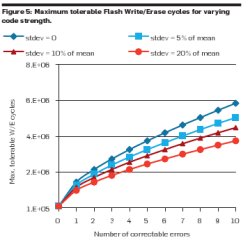
In this paper, we examine the use of Flash storage in the server domain. Wear-out has the potential to limit the use of Flash in this domain. To seriously consider Flash in the server domain, architectural support must exist …

Pages 98-103

COLUMN: Last byte

Q&A: Our Dame Commander

Wendy Hall discusses her plans to increase ACM's membership and to create task forces in China, India, and Europe.

Pages 112-ff

SECTION: Virtual extension

Principles for Effective Virtual Teamwork

Vitual teams are becoming ubiquitous. Therefore, it is important to understand how to make virtual teams effective.

Pages 113-117

How Culture Influences IT-Enabled Organizational Change and Information Systems

The prevailing business culture in the U.S. undoubtedly encouraged the rapid and radical changes prescribed with Business Process Re-engineering (BPR). However, America's egalitarianism and individualism also created a need for …

Pages 118-123

Non-Work Related Computing (NWRC)

The internet is becoming a commodity in organizations with an increase in accessibility by professionals from their own work desks. Vault.com conducted a survey in 1999 with 1,244 respondents, and found that 84% of employees …

Pages 124-128

Object Language and Impression Management

What does object language communicate about IT professionals? Can the messages conveyed by object language be used to offset the stereotypical image of a "computer geek?"

Pages 129-131

The Impact of the Digital Divide on e-Government Use

Internet use has been growing steadily for the past decade. In a recent report, the Pew Internet & American Life Project survey found that 75% of American adults use the Internet. As more citizens turn to the Internet as a medium …

Pages 132-135

Analysis of Industry-Specific Concentration of CPOs in Fortune 500 Companies

In June 2005, a unit of lexis-nexis discovered the theft of 310,000 customer records containing sensitive information such as customer names, addresses, and social security numbers. This incident followed closely on ChoicePoint's …

Pages 136-141

Mobile Phones in the Classroom: if you can't beat them, join them

During the past six years the rapid proliferation of mobile devices, particularly cellular phones, has presented an opportunity to develop new interactive classroom systems which have the potential to enhance students' learning …

Pages 142-146

Technical Opinion: Online Auctions Hidden Metrics

The number of online auctions that don't result in valid transactions is astonishing, which leads us to call for a better understanding about unsuccessful auctions. Why are there so many of them and what can be done about it?

Pages 147-149

About Communications | Join ACM External Link | Renew External Link | Subscribe External Link | Sign In | For Authors | For Advertisers External Link | Privacy | Site Map | Help | Contact Us | Mobile Site

Copyright © 2012 by the ACM. All rights reserved.