CACM logo

August 2009 (Vol. 52, No. 8)
A Blind Person's Interaction with Technology

Table of Contents

DEPARTMENT: Professions board letter

DEPARTMENT: Publisher's corner

DEPARTMENT: Letters to the editor

DEPARTMENT: In the virtual extension

In the virtual extension

Communications' Virtual Extension brings more quality articles to ACM members. These articles are now available in the ACM Digital Library.

Page 10

DEPARTMENT: blog@CACM

An ICT research agenda, HPC and innovation, and why only the developed world lacks women in computing

The Communications Web site, http://cacm.acm.org, features 13 bloggers in the BLOG@CACM community. In each issue of Communications, we'll publish excerpts from selected posts, plus readers' comments.

Pages 12-13

DEPARTMENT: CACM online

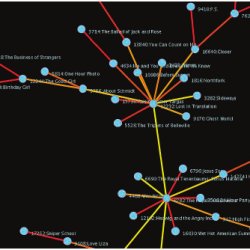
COLUMN: News

Just for you

Recommender systems that provide consumers with customized options have redefined e-commerce, and are spreading to other fields.

Pages 15-17

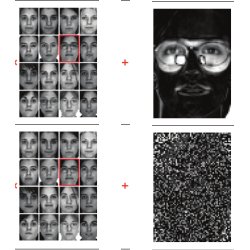
Face recognition breakthrough

By using sparse representation and compressed sensing, researchers have been able to demonstrate significant improvements in accuracy over traditional face-recognition techniques.

Pages 18-19

IT drives policy---and vice versa

Technologists discuss government policies affecting broadband, patent reform, privacy---and President Obama's effect on it all.

Page 20

Learning through games

Electronic games can inspire players to explore new ideas and concepts. By gaining a better understanding of the dynamic between player and game, researchers hope to develop more interesting and effective approaches.

Pages 21-22

U.S. unveils cybersecurity plan

'Intent and timing' may help the federal cyberspace initiative work better than previous blueprints.

Page 23

COLUMN: Viewpoints

Economic and business dimensions: Entrepreneurship during a slump

A contrarian's perspective on how entrepreneurial opportunities and innovation can thrive during an economic crisis.

Pages 24-26

Education: Alice 3: concrete to abstract

The innovative Alice 3 programming environment, currently in beta testing, teaches students to program with Alice and Java software.

Pages 27-29

Privacy and security: An ethics code for U.S. intelligence officers

Debating and arguing the points of a proposed code of behavior to provide guidance in making choices can produce the most effective ethics training.

Pages 30-32

Viewpoint: Time for computer science to grow up

As the computer science field has evolved, so should the methods for disseminating computing research results.

Pages 33-35

SECTION: Practice

The pathologies of big data

Scale up your datasets enough and your apps come undone. What are the typical problems and where do the bottlenecks surface?

Pages 36-44

Browser security: lessons from Google Chrome

To shield the browser from attacks, Google Chrome developers eyed three key problems.

Pages 45-49

CTO roundtable: cloud computing

The age of cloud computing has begun. How can companies take advantage of the new opportunities it provides?

Pages 50-56

SECTION: Contributed articles

A blind person's interactions with technology

Meaning can be as important as usability in the design of technology.

Pages 58-66

Revitalizing computing education through free and open source software for humanity

The humanitarian focus of socially useful projects promises to motivate community-minded undergrads in and out of CS.

Pages 67-75

SECTION: Review articles

Boolean satisfiability from theoretical hardness to practical success

Satisfiability solvers can now be effectively deployed in practical applications.

Pages 76-82

SECTION: Research highlights

Does distributed development affect software quality?: an empirical case study of Windows Vista

Pages 85-93

COLUMN: Last byte

Puzzled: Probability and intuition

Welcome to three new puzzles. Solutions to the first two will be published next month; the third is (as yet) unsolved. In each puzzle, the issue is how your intuition matches up with the mathematics.

Page 104

SECTION: Virtual extension

What determines IT spending priorities?

Introduction

Global spending on Information Technology (IT) continues to grow and is expected to reach $1.66 trillion in 2009. In addition, IT represents a large (40--45%) and stable share (in nominal dollars) of firm spending …

Pages 105-110

Distinguishing citation quality for journal impact assessment

Introduction

The research community has long and often been fervently keen on debating the topic of journal impact. Well, just what is the impact of a journal? Today, the Science Citation Index (SCI) recognizes over 7,000 journals …

Pages 111-116

The critical elements of the patch management process

Introduction

"After the flames from the slammer's attack were doused and the technology industry caught up on its lost sleep, we started asking questions. Why did this happen? Could we have prevented it? What can we do to keep …

Pages 117-121

Learning to build an IT innovation platform

Introduction

Information Technology (IT) pervades every aspect of a firm's value chain as a vast electronic network of interconnected applications and data. Managers perceive the immense potential of this complex infrastructure …

Pages 122-126

Global software development: where are the benefits?

Introduction

Global Software Development (GSD) is increasingly becoming the normal practice in the software industry, readily evidenced by U.S. estimates that the value of the offshore software development market has increased …

Pages 127-131

Ranking billions of web pages using diodes

Introduction

Because of the web's rapid growth and lack of central organization, Internet search engines play a vital role in assisting the users of the Web in retrieving relevant information out of the tens of billions of documents …

Pages 132-136

Attracting Native Americans to computing

Introduction

In the last two decades, the racial/ethnic composition of those earning computer science (CS) bachelor's degrees has changed in the U.S. Between 1985 and 2005, the proportion of CS bachelor's degrees awarded to White …

Pages 137-140

Technical opinion: What drives the adoption of antiphishing measures by Hong Kong banks?

Introduction

Phishing mongers and posers have taken the world by a storm and it is estimated that the annual financial loss due to phishing scams is at least US $320 million. Hong Kong has been a hotspot of phishing attacks and …

Pages 141-143

About Communications | Join ACM External Link | Renew External Link | Subscribe External Link | Sign In | For Authors | For Advertisers External Link | Privacy | Site Map | Help | Contact Us

Copyright © 2009 by the ACM. All rights reserved.