CACM logo

June 2009 (Vol. 52, No. 6)
One Laptop Per Child: Vision vs. Reality

Table of Contents

DEPARTMENT: ACM-W letter

ACM-W Celebrates Women in Computing

Computer science is no longer the hot, high-enrollment field it once was. While many suggestions have been made for increasing enrollments, it is unlikely that computer science will ever be as vibrant as it could be — and should …

Page 5

DEPARTMENT: Letters to the editor

DEPARTMENT: blog@CACM

Speech-Activated User Interfaces and Climbing Mt. Exascale

The Communications Web site, cacm.acm.org, features 13 bloggers in the BLOG@CACM community. In each issue of Communications, we'll publish excerpts from selected posts, plus readers' comments. Tessa Lau discusses why she doesn't …

Pages 10-11

DEPARTMENT: CACM online

Making that Connection

The goal of holding readers' attention has made provocation a timeworn editorial strategy. Communications doesn't resort to screaming headlines like most storefront fare, but …

Page 12

COLUMN: News

Micromedicine to the Rescue

Medical researchers have long dreamed of "magic bullets" that go directly where they are needed. Now micromedicine and nanotechnology are making a range of molecules formerly inaccessible as drugs available to be delivered at …

Pages 13-15

Content Control

Entertainment businesses say digital rights management prevents the theft of their products, but access control technologies have been a uniform failure when it comes to preventing piracy. Fortunately, change is on the way.

Pages 16-17

Autonomous Helicopters

Researchers are improving unmanned helicopters' capabilities to address regulatory requirements and commercial uses.

Pages 18-20

Looking Backward and Forward

CRA's Computing Community Consortium hosted a day-long symposium to discuss the important computing advances of the last several decades and how to sustain that track record of innovation.

Page 21

COLUMN: Viewpoints

Answering the Wrong Questions Is No Answer

Asking the wrong questions when building and deploying systems results in systems that cannot be sufficiently protected against the threats they face.

Pages 22-24

Reducing Risks of Implantable Medical Devices

The convergence of medicine with radio communication and Internet connectivity exposes implantable medical devices (IMDs) not only to safety and effectiveness risks, but also to security and privacy risks. Legislation, regulation …

Pages 25-27

Beyond Computational Thinking

If we are not careful, our fascination with "computational thinking" may lead us back into the trap we are trying to escape.

Pages 28-30

Why 'Open Source' Misses the Point of Free Software

Decoding the important differences in terminology, underlying philosophy, and value systems between two similar categories of software.

Pages 31-33

Kode Vicious: Obvious Truths

How to determine when to put the brakes on late-running projects and untested software patches.

Pages 34-35

SECTION: Practice

Hard-Disk Drives: The Good, the Bad, and the Ugly

New drive technologies and increased capacities create new categories of failure modes that will influence system designs.

Pages 38-45

Network Front-End Processors, Yet Again

The history of NFE processors sheds light on the trade-offs involved in designing network stack software.

Pages 46-50

Whither Sockets?

The pervasive and long-lasting sockets API has remained largely unchanged since 1982. How have developers worked around its inherent limitations and what is the future of sockets in a changing networked world?

Pages 51-55

SECTION: Contributed articles

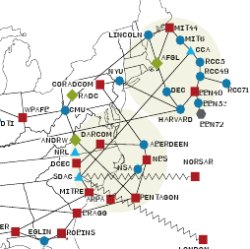
The Claremont Report on Database Research

Database research is expanding, with major efforts in system architecture, new languages, cloud services, mobile and virtual worlds, and interplay between structure and text.

Pages 56-65

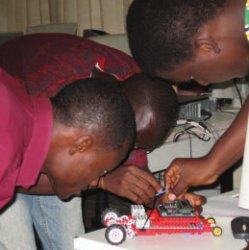
One Laptop Per Child: Vision vs. Reality

The vision is being overwhelmed by the reality of business, politics, logistics, and competing interests worldwide.

Pages 66-73

SECTION: Review articles

How Computer Science Serves the Developing World

Information and communication technology for development can greatly improve quality of life for the world's neediest people.

Pages 74-80

SECTION: Research highlights

Securing Frame Communication in Browsers

Many Web sites embed third-party content in frames, relying on the browser's security policy to protect against malicious content. However, frames provide insufficient isolation in browsers that let framed content navigate other …

Pages 83-91

Two Hardware-Based Approaches for Deterministic Multiprocessor Replay

Modern computer systems are inherently nondeterministic due to a variety of events that occur during an execution, including I/O, interrupts, and DMA fills. The lack of repeatability that arises from this nondeterminism can make …

Pages 93-100

COLUMN: Last byte

Puzzled: Solutions and Sources

Last month (May 2009, p. 112) we posed a trio of brain teasers, including one as yet unsolved, concerning relationships among numbers.

Page 103

Future Tense: Webmind Says Hello

Future Tense, one of the revolving features on this page, presents stories and essays from the intersection of computational science and technological speculation, their boundaries limited only by our ability to imagine what …

Page 104

SECTION: Virtual extension

Hyperlinking the Work for Self-Management of Flexible Workflows

Pages 113-117

Advancing Information Technology in Health Care

Pages 118-121

Deriving Mutual Benefits From Offshore Outsourcing

Pages 122-126

The Challenge of Epistemic Divergence In IS Development

Pages 127-131

Forensics of Computers and Handheld Devices

Pages 132-135

Re-Tuning the Music Industry: Can They Re-Attain Business Resonance?

Pages 136-140

A Holistic Framework for Knowledge Discovery and Management

Pages 141-145

Leveraging First-Mover Advantages in Internet-Based Consumer Services

Pages 146-148

About Communications | Join ACM External Link | Renew External Link | Subscribe External Link | Sign In | For Authors | For Advertisers External Link | Privacy | Site Map | Help | Contact Us

Copyright © 2009 by the ACM. All rights reserved.